
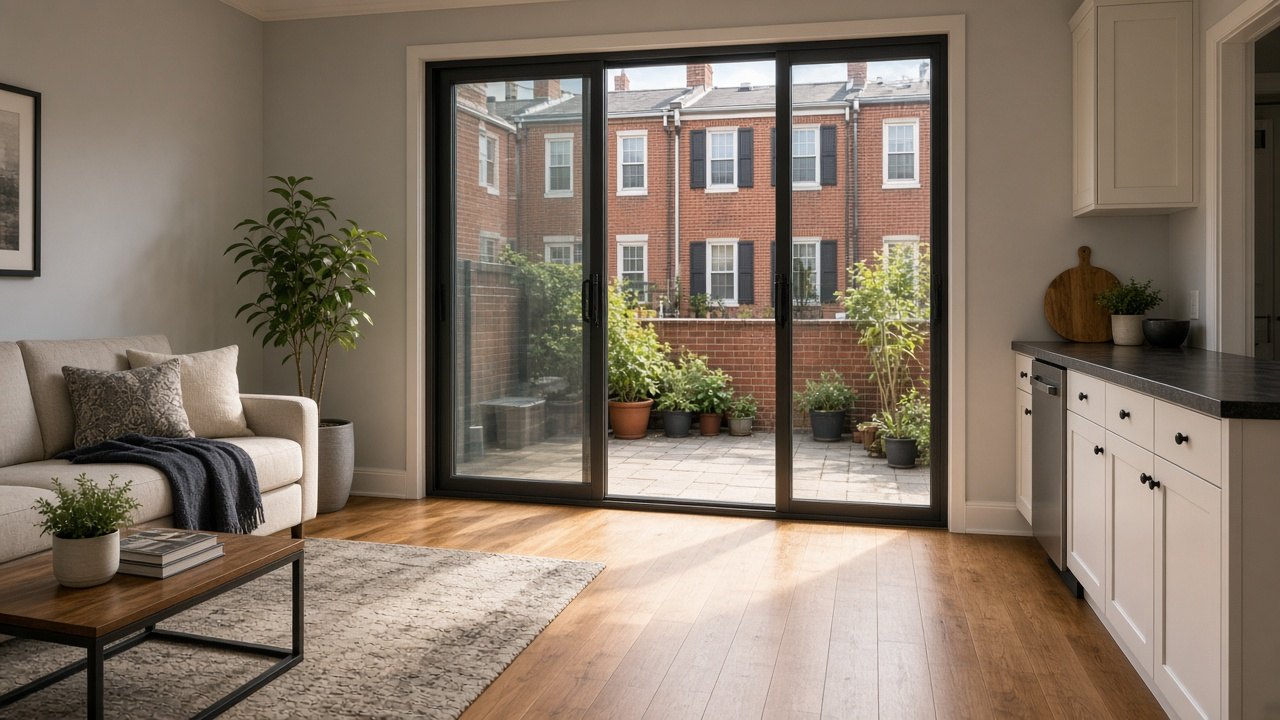
Yes, you can put window film on a sliding glass door, and for most Philadelphia homes it is one of the simplest upgrades you can make to that glass. The right film cuts solar heat, glare and UV fading, adds daytime or full-time privacy, or helps hold the glass together if someone tries to break in. The key is matching the film to the problem you actually have and to the type of glass in your door.
A rear slider is often the largest pane of glass in a rowhome, twin or condo, which makes it the main source of afternoon heat, glare, faded floors and neighbor sightlines. Here is which film solves which problem and what to expect from a professional install.
Can You Put Window Film on a Sliding Glass Door?
Yes. Most modern sliders use tempered glass, and many are dual-pane with a Low-E coating. Film can go on all of these, but not every film suits every door.
What installers check first
Before recommending a film, a professional installer looks at:
- Glass type: tempered, laminated, single-pane or dual-pane (insulated) glass.
- Coatings: whether the glass already has a Low-E coating or a factory tint.
- Size and exposure: Large panels that get direct afternoon sun behave differently from small, shaded ones.
- Frame and seals: Worn seals or failed insulated units should be addressed before film goes on.
Why film-to-glass compatibility matters
When the sunlit center of a large pane gets much hotter than the edges hidden in the frame, the difference is called thermal stress. A darker or more absorptive film on the wrong glass can add to it. That is why professionals follow each manufacturer’s film-to-glass guidelines, which list the glass types a film is approved for. Following them protects the glass and keeps warranties intact.
Which Window Film Is Right for Your Sliding Glass Door?
It depends on what bothers you most about the door today. Start with the goal, then choose the film.
Heat and energy: solar control and ceramic films
If your slider faces south or west, opens onto a sunny deck, or sits in a high-rise condo with full sun, heat is usually the first complaint. Solar control film rejects part of the sun’s energy before it warms the room. Ceramic films do this without a mirrored look and don’t interfere with phone or Wi-Fi signals. For a deeper look, see our post on whether ceramic tint reduces heat.
Glare: kitchens, TV rooms and home offices
Many rowhome kitchens and family rooms open onto the yard through the slider, and low afternoon sun lands on screens and countertops. A moderate solar control film cuts that glare while keeping the view.
UV and fading: floors, rugs and furniture
The floor in front of a slider takes the most sun in the house. UV protection film blocks ultraviolet light, which is a major cause of faded hardwood, rugs and upholstery. Most solar control and safety films block UV as well, so you often get this benefit alongside your main goal.
Privacy: frosted, decorative and one-way films
Rear sliders in Philadelphia often face a neighbor’s windows, a shared alley or a small yard with close sightlines. Privacy window film comes in a few forms:
- Frosted or matte films blur the view in both directions, day and night, while still letting light through.
- Decorative films add patterns or gradients, often covering only the lower portion of the door.
- Reflective (one-way) films give daytime privacy because the outside is brighter than the inside.
The caveat with reflective film: it reverses at night. When your lights are on and it is dark outside, people can see in. Our guide to day-and-night one-way film covers this in detail. If you need privacy after dark, choose a frosted film or pair a reflective film with shades.
Safety and security: clear films that hold glass together
Safety and security window film is thicker than standard film and bonds to the glass so that broken pieces stay together instead of falling out. On a ground-floor rear slider, that can delay a smash-and-grab attempt and reduce the risk of injury from flying glass.
Security film is not break-in proof. It buys time and makes entry harder and noisier. For more resistance, installers can add an attachment system that anchors the film to the door frame. Film works alongside good locks and a secondary bar, not instead of them.
What Are the Best Window Film Types for Sliding Glass Doors?
The table below compares the main options. Specs are shown only where they are published on the product pages we link to.
| Film type | Best for | Look | Example we install |
|---|---|---|---|
| Spectrally selective | Heat and UV with minimal darkening | Nearly clear, natural from inside and out | 3M Prestige 70: 70% VLT, up to 40% heat rejection, over 99% UV block |
| Ceramic | Stronger heat control, no metal | Neutral tint, no mirror effect | 3M Ceramic 35: 35% VLT, up to 59% heat rejection, 99% UV block |
| Darker sun control | More heat and glare control | Noticeably tinted | 3M Night Vision 35: 35% VLT, up to 50% heat rejection, over 99% UV block |
| Frosted / privacy matte | Full-time privacy | Etched or frosted glass look | 3M Privacy Matte: decorative, not solar-rated |
| Decorative | Privacy with style, partial coverage | Patterns, gradients, bands | Selected to match your space |
| Safety / security | Holding broken glass, delaying entry | Clear | 3M Ultra S800: 8 mil thick, over 99% UV block |
VLT (visible light transmission) is how much daylight passes through. A higher number means a brighter room.
Does the Film Brand Matter for a Patio Door?
Less than you might think. We install professional-grade 3M, LLumar and Madico films, and each brand offers solar control, privacy and safety options. For a sliding door, the film series, glass compatibility and installation quality matter more than the logo.
What Should Philadelphia Homeowners Consider?
- Hot, humid summers and cold winters: Solar control film handles summer heat gain, while Low-E film also helps keep heat inside in winter.
- Rowhomes and twins: Rear sliders onto small yards and decks often sit a few feet from a neighbor’s windows. Privacy and glare usually matter as much as heat here.
- Condos and high-rises: Balcony sliders in Center City, Old City, Fishtown and Northern Liberties towers get full sun and strong screen glare. If your building or association has rules about exterior appearance, check them before choosing a reflective film.
- Ground-floor security: In dense neighborhoods, a rear slider off an alley or shared yard is a common entry point, which makes clear safety film a practical upgrade.
If winter heat loss through your door bothers you as much as summer sun, our post on Low-E window film explains how it works.
The U.S. Department of Energy’s Building America Solution Center at Pacific Northwest National Laboratory lists surface-applied films among the window attachments for solar control and energy efficiency. It also notes that some films can increase heating needs in winter, so weigh your door’s orientation and year-round priorities.
DIY Film or Professional Installation?
For a sliding glass door, professional installation is usually worth it. Peel-and-stick films sold online can work on a small window, but patio door panels are large and unforgiving.
- Fit: Large panels are hard to cover edge to edge without seams, gaps or crooked lines.
- Contamination: Dust, hair and bubbles trapped under the film are very visible on a door you look through every day.
- Glass compatibility: DIY buyers rarely check whether a film is approved for tempered, dual-pane or Low-E glass.
- Warranty: Professional installs typically include manufacturer film warranties and installer workmanship coverage.
What professional installation looks like
Here is how our installation process typically goes:
- Assessment: We check your glass type, coatings, size and sun exposure.
- Film selection: We recommend films approved for your glass that match your goal.
- Preparation: The glass is cleaned and scraped, and the frame edges are detailed.
- Installation: The film is wet-applied, squeegeed and trimmed tight to the frame.
- Curing: The film may look slightly hazy or show small water pockets for a few days while the adhesive cures, which is normal.
How Do You Care for Film on a High-Traffic Door?
Wait until the film has cured before cleaning it, then use a soft cloth and a mild, ammonia-free cleaner. Never use razor blades or abrasive pads on the film side, and watch for pet claws at the bottom edge. See our guide to window film care and maintenance for details.
Frequently Asked Questions
Can I use window film on my sliding glass doors?
Yes. Sliding glass doors are one of the most common places to install film. A professional will confirm whether your glass is tempered, dual-pane or Low-E and choose a film the manufacturer approves for it, so you get the benefit without risking thermal stress or a voided warranty.
Can I use window film on patio doors or French doors?
Yes. Patio doors and French doors take the same films as sliding doors. French doors have smaller individual panes, which can make privacy and decorative films especially easy to fit. The same glass compatibility check applies, particularly for dual-pane units with built-in grilles or Low-E coatings.
What type of shatterproof window film is best for a sliding glass door?
Look for a clear safety and security film rather than a thin decorative or solar film. Thicker films hold broken glass together more effectively. For more resistance, an installer can anchor the film to the door frame with an attachment system. No film makes glass unbreakable, but a good security film can slow down entry and keep shards contained.
Is there a one-way privacy film for sliding glass doors?
Yes, reflective films give one-way privacy during the day, when it is brighter outside than inside. At night, with your lights on, the effect reverses and people can see in. If you need privacy after dark, choose a frosted or decorative film, or combine a reflective film with blinds or shades.
Will tinting my sliding door make the room too dark?
Not if you choose the right film. Spectrally selective films such as 3M Prestige 70 transmit 70% of visible light, so the room stays bright while heat and UV are reduced. Darker films give more heat control and privacy. Your installer can show you samples on your own glass before you decide.
What are the downsides of window film?
Reflective films lose their privacy at night. Some films are not approved for certain glass types, so a compatibility check matters. DIY film on large doors often bubbles or peels. Some solar control films can reduce helpful winter sun. Security film delays entry but does not replace locks. A professional assessment helps you avoid all of these.
How can I cover a sliding glass door without curtains?
Window film is a popular alternative to curtains and vertical blinds. Frosted or decorative film adds privacy while letting light in, and solar control film cuts heat and glare while keeping your view. Nothing gets in the way of the door as it slides.
Will window film void my door or window warranty?
It shouldn’t, if the film is chosen correctly. Professional installers follow the film manufacturer’s film-to-glass guidelines to protect the glass and its warranty. Ask your installer which film is approved for your glass and what coverage applies before you commit.
Get the Right Film for Your Sliding Glass Door
Not sure which film is right for your sliding glass door? Our Philadelphia team will check your glass, talk through your goals and recommend a 3M, LLumar or Madico film that fits. Learn more about our residential window film installation, then get a free quote or call (267) 394-7980.