How Solar Heat Enters Office Buildings
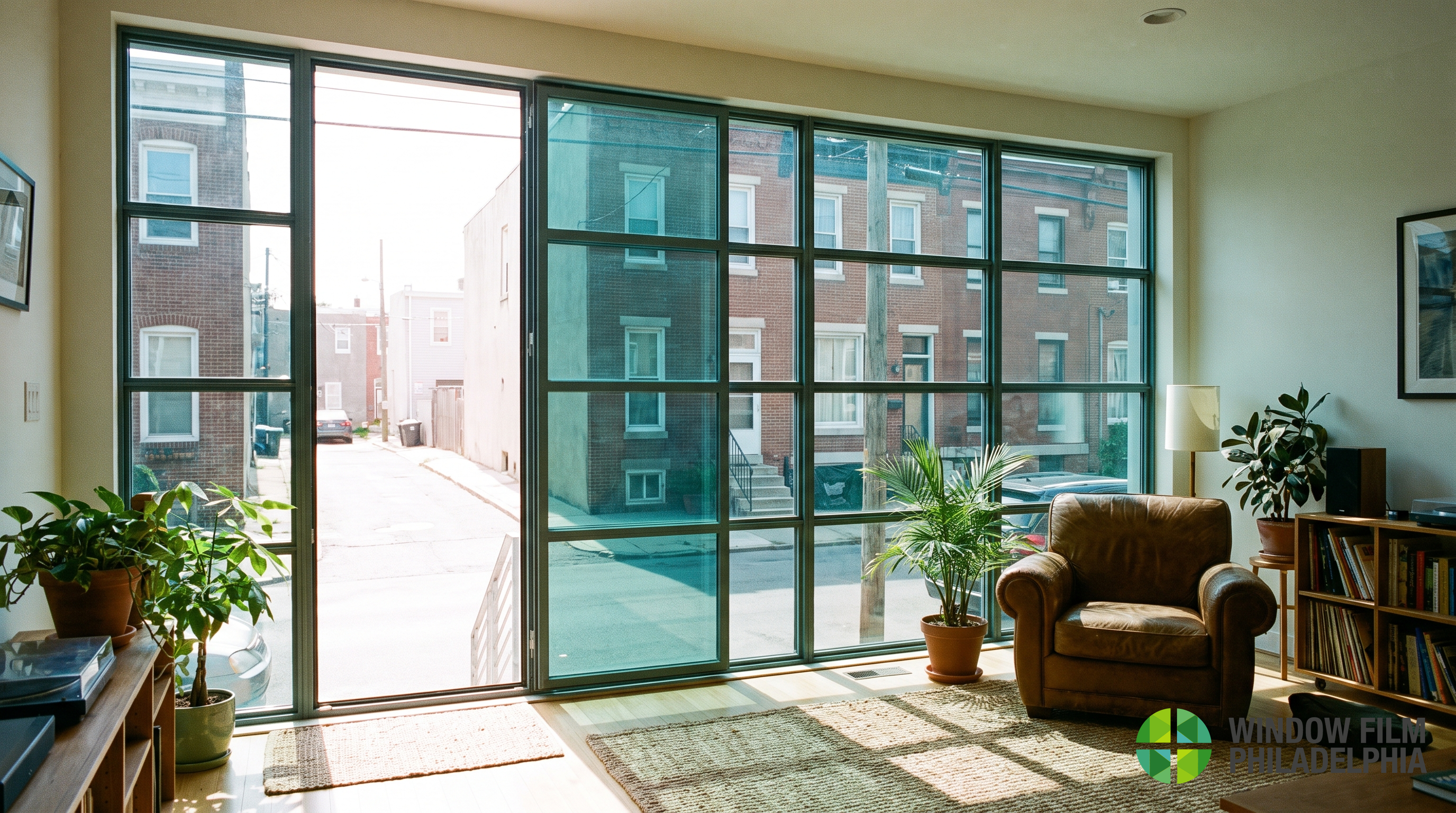
Philadelphia’s commercial buildings lose a significant portion of their cooling budget to solar heat gain. From the glass towers lining Market Street to the converted industrial spaces in Fishtown, untreated windows allow infrared radiation to pour through the glass, warming interior surfaces and forcing air conditioning systems to work overtime. During the city’s hot, humid summers — when July averages reach the mid-80s and heat waves push well into the 90s — this thermal load can make entire floors uncomfortable and send energy bills soaring.
Facility managers across the region regularly ask the same question: does heat control window film work well enough to meaningfully reduce cooling costs in a commercial setting? The evidence from federal research and real-world installations says yes, and the savings can be substantial. The GSA’s solar control film study found that heat gain through windows accounts for roughly 28 percent of cooling energy demand in U.S. commercial buildings. Applied solar-control films address this directly by reflecting or absorbing solar energy before it reaches the interior, cutting a significant portion of that demand without replacing a single pane of glass.
Does Heat Control Window Film Work on Different Glazing Types?
The performance of heat control film depends partly on the existing glazing. Single-pane clear windows — common in Philadelphia’s older commercial building stock — see the most dramatic improvement, because untreated single-pane glass has a Solar Heat Gain Coefficient (SHGC) of 0.70 or higher, meaning more than two-thirds of the sun’s thermal energy passes straight through.
Modern films bring that number down significantly. The 3M Sun Control Prestige Series, for instance, uses multilayer nanotechnology to reject up to 97% of infrared radiation and 99% of UV rays. The Prestige PR70 variant achieves a TSER (Total Solar Energy Rejection) of 50% and lowers the effective SHGC to approximately 0.40. That represents a meaningful reduction in the amount of solar heat entering the building, especially on west- and south-facing exposures where the afternoon sun is most intense.
For double-pane insulated glass units found in newer Center City office towers, the incremental improvement is smaller but still worthwhile. Film applied to the interior surface of an IGU still rejects infrared radiation that would otherwise be absorbed by the interior pane and radiated into the occupied space.
Product Options for Philadelphia Commercial Properties
Choosing the right film means matching the product to the building’s specific needs. Several product families are well suited to office environments:
- 3M Sun Control Prestige Series — Premium nanotechnology film that rejects infrared heat while maintaining high visible light transmission. Non-metallic construction means no interference with cell signals or WiFi, an important consideration for modern offices.
- 3M Thinsulate Climate Control Series — A low-e film that offers both summer heat rejection and winter heat retention. This dual-season performance is particularly valuable in Philadelphia, where cold winters follow hot summers.
- LLumar Solar Control Films — A broad product line with multiple VLT (Visible Light Transmission) options, allowing building managers to balance heat rejection with natural daylighting preferences.
Each product offers distinct performance characteristics, and the energy savings you achieve will depend on selecting the film whose SHGC, VLT, and TSER values best match your building’s orientation and glazing type.
Real-World Benefits for Office Occupants
Beyond the raw energy numbers, heat control window film addresses several comfort and workplace quality issues that matter to tenants and employees.
Temperature Consistency
Offices with large glazed facades often suffer from hot spots — areas near windows that are significantly warmer than the building’s core. Film reduces this temperature differential, creating a more uniform environment that allows the HVAC system to maintain a single, comfortable setpoint without overcooling the interior to compensate for sun-exposed zones.
Glare Reduction
Afternoon sun streaming through west-facing windows can make computer screens unreadable and force employees to close blinds, negating the benefits of natural light. Quality solar control films reduce glare while preserving daylight, so occupants keep their views and their visibility.
UV and Fade Protection
The 99% UV rejection common to premium films protects office furnishings, flooring, artwork, and merchandise from fading. In retail environments along Walnut Street or in museum-adjacent buildings near the Benjamin Franklin Parkway, this preservation benefit can be as valuable as the energy savings themselves.
The Philadelphia Climate Advantage
Philadelphia’s position in the humid subtropical climate zone means the cooling season runs from May through September, with peak demand in July and August. But the city also experiences cold winters, which is where dual-performance films like the 3M Thinsulate series shine.
Low-e films work in both directions: in summer, they reject incoming infrared heat; in winter, they reflect interior heat back into the room, reducing heating demand. For a Philadelphia office building with single-pane glass, this year-round performance can deliver a more compelling return on investment than a summer-only solar film.
Historic buildings in Old City and Society Hill face an additional constraint: preservation guidelines often restrict window replacement. Heat control film offers a way to improve thermal performance without altering the building’s historic exterior, making it an attractive option for property owners navigating the Philadelphia Historical Commission’s review process.
Comparing Film to Window Replacement
For many Philadelphia building owners, the alternative to window film is full window replacement — a project that can cost tens of thousands of dollars per floor, require permits, and involve weeks of disruption. In historic districts, replacement windows may need to match the original design exactly, further driving up costs and extending timelines.
Heat control film delivers a meaningful improvement in thermal performance at a fraction of that cost, typically installed in a single day per floor with no structural changes. For buildings where the existing glass is in good condition but simply underperforming on heat rejection, film is often the more sensible investment. The payback period for commercial installations commonly falls within a few cooling seasons, after which the savings continue for the life of the film.
What to Expect From Installation
Commercial window film installation is an interior application, which means no exterior access equipment is needed for most floors and weather is not a factor. A professional installation team can typically complete a floor of an office building over a weekend, minimizing disruption to tenants.
The process begins with thorough cleaning of the interior glass surface to ensure proper adhesion. The film is then precision-cut to fit each window pane, applied with a specialized mounting solution, and carefully squeegeed to remove any air bubbles or excess moisture.
After installation, the film requires a brief curing period during which it may appear slightly hazy. This clears within a few days as the adhesive fully bonds to the glass. Once cured, the film is virtually invisible for high-VLT variants or adds a subtle tint for lower-VLT options, and it requires no special maintenance beyond normal window cleaning.
Making the Decision
The question facility managers keep coming back to is straightforward: does heat control window film work well enough to justify the investment? For most Philadelphia commercial properties with significant glazed area, the answer is yes — particularly when you factor in reduced cooling costs, improved occupant comfort, UV protection for interiors, and the avoidance of costly window replacement.
The right way to decide is with a site-specific assessment. Every building’s glazing type, orientation, occupancy pattern, and HVAC capacity is different, and a tailored recommendation ensures you select the film that delivers the best performance for your property.
Schedule Your Philadelphia Window Film Consultation
If you manage a commercial property in Philadelphia and want to explore how heat control window film can reduce your cooling costs and improve comfort, our team is ready to help. We serve office buildings throughout the city — from Center City to University City, from Manayunk to the Navy Yard — and we provide professional assessments tailored to your building’s specific needs.
Contact us today to schedule a free consultation and learn which 3M or LLumar film is the right fit for your property.