
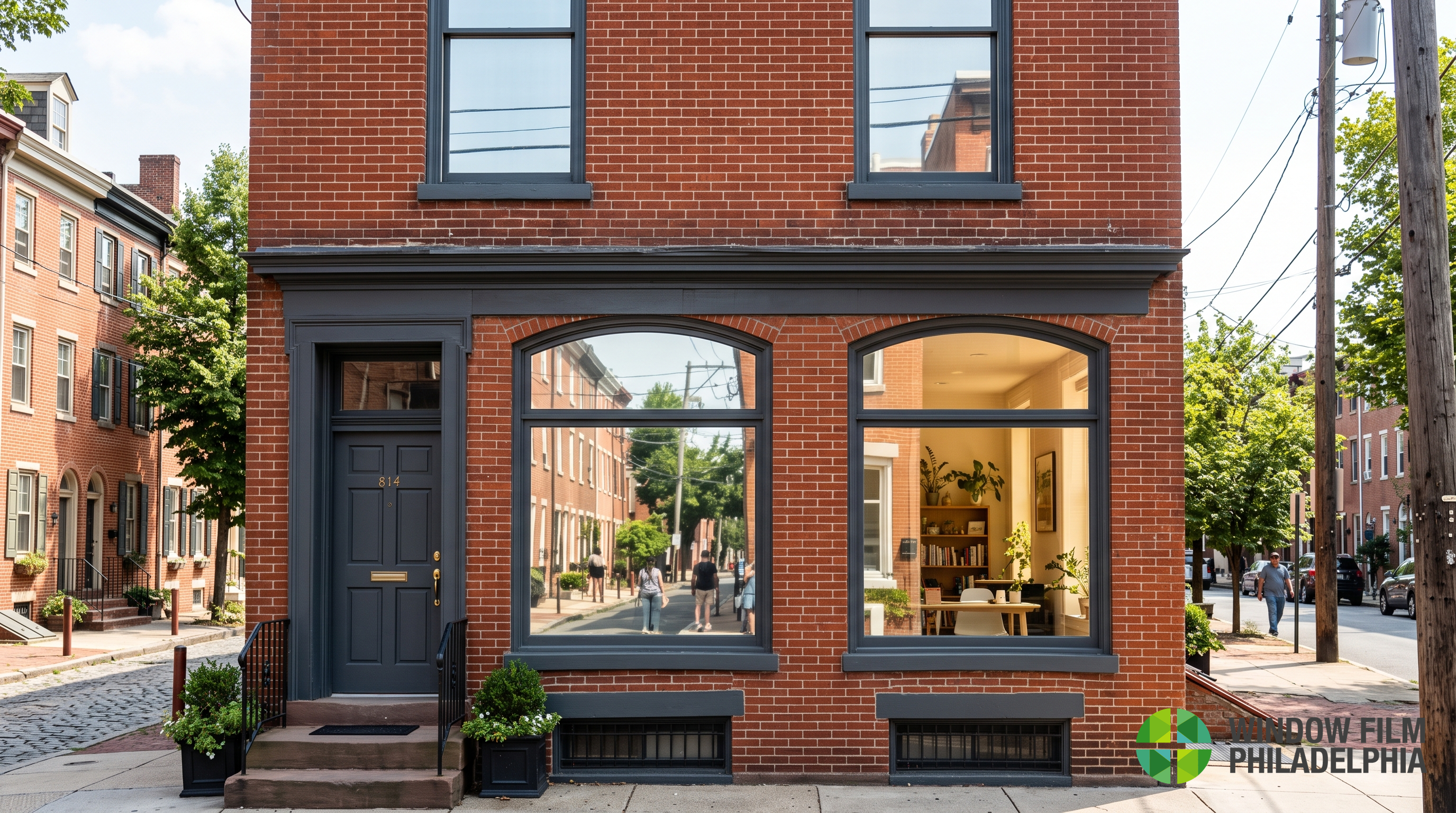
Philadelphia rowhomes, trinities, and brownstones put glass remarkably close to public life. A Rittenhouse parlor window can sit an arm’s length from the sidewalk, and in Fishtown a neighbor’s window may be close enough to borrow sugar from. So the first question most homeowners ask is about privacy, and the second question is the tricky one: what happens after sunset, when the lights come on and the physics flips? That is exactly why so many people end up researching the best one way window film day and night Philadelphia homeowners can realistically choose, and why the honest answer depends as much on lighting levels as it does on the product itself. Understanding how light behaves on both sides of the glass helps you build a privacy plan that works at two in the afternoon and again at ten at night, without sacrificing the daylight and street views that make rowhome living enjoyable.
How One Way Privacy Actually Works
A so-called one way film is not magic, and understanding the mechanism prevents disappointment later. The effect relies entirely on a difference in brightness between the two sides of the glass. On a bright afternoon, the street side of your window receives dramatically more light than your interior, so a reflective or darkly tinted film sends most of that outdoor light back outward. Anyone standing on the bright sidewalk sees a mirror-like surface, while you still see out clearly from the dimmer interior side. This is the classic daytime mirror effect, and it works beautifully on the sun-baked front facades of Rittenhouse brownstones and Old City rowhomes alike.
The U.S. Department of Energy notes that windows are a major pathway for heat gain and loss in buildings, which is one reason film selection should balance privacy against thermal performance rather than focus on looks alone. At night, the situation reverses completely. When your interior lights are on and it is dark outside, your living room becomes the brighter side of the glass. The mirror effect flips toward you, and someone outside can now see in with surprising clarity. No reflective film alone overcomes this fundamental limit, because the film simply reflects whichever side happens to be brighter. Anyone who promises true mirrored privacy around the clock with film alone is overselling the technology.
The Day and Night Reality Check
Honest guidance matters here, especially for Philadelphia rowhomes where a first-floor window may sit directly across from a neighbor’s kitchen or a brightly lit commercial storefront on a corridor like Passyunk Avenue. Reflective and dark films deliver excellent daytime privacy, but they cannot deliver true nighttime privacy while your interior lights are burning. What actually works after dark is a layered, combination approach:
- Layered privacy: Pair a daytime film with top-down bottom-up shades, drapes, or cafe curtains that you close after dark. The film handles the day; the soft treatment handles the evening.
- Darkened film plus smart lighting: A low-VLT film reduces how much interior light escapes through the glass, and simply repositioning lamps away from the window narrows the visibility window considerably.
- Frosted or decorative films on problem panes: In bathrooms, ground-floor powder rooms, entry sidelights, and transoms, a decorative privacy film provides round-the-clock privacy that never depends on light levels at all.
- Exterior lighting strategy: Keeping porches and stoops lit keeps the exterior side brighter at night, which preserves more of the mirror effect on street-facing glass than most homeowners expect.
This is why a good consultation starts with a window-by-window walkthrough rather than a one-size-fits-all quote. A third-floor bedroom facing a quiet alley has very different needs than a first-floor living room on a busy South Street block, and the right plan usually mixes several solutions across the same house.
Why 3M Night Vision Series Fits Philadelphia Homes
For homeowners who want strong daytime privacy without turning their home into a cave, the 3M Night Vision Series is one of the most practical options available. These films come in visible light transmission levels of roughly 15 to 35 percent, giving you meaningful control over how much daylight enters each room. A 15 percent film on a street-facing parlor window delivers deep daytime privacy, while a 35 percent film on a garden-facing room keeps things bright and airy. The series’ signature trait, though, is its low interior reflectivity: the film keeps your view out noticeably clearer at night than many traditional dark or metallic films, so you are not staring at your own reflection every evening.
That matters in real Philadelphia terms. In a Fishtown trinity or a Society Hill townhouse, you want to watch an evening storm roll over the skyline without the window turning into a mirror at dusk. The low interior reflectivity also preserves more of your connection to the street and the sky while still cutting glare and heat during the day. On our hot, humid summers, when low afternoon sun hammers west-facing glass in Queen Village rowhomes, that glare reduction is genuinely noticeable the first evening you install it.
Benefits Beyond Privacy
While privacy is the headline reason homeowners call, one way films quietly pull double duty on comfort, protection, and long-term preservation:
- Glare control: Screens and televisions stop fighting the sun, which is a real relief for a bay window home office in a Graduate Hospital rowhome.
- Heat rejection: Quality films reject a substantial share of incoming solar energy, easing the load on your air conditioning during July and August humidity.
- UV blocking: Most quality films block about 99 percent of UV rays, which protects hardwood floors, oriental rugs, and upholstery from the fading you see on sun-facing rooms after just a few summers.
- Evened-out temperatures: Rooms that used to run hot in the afternoon stop feeling like greenhouses, which makes the whole floor plan more usable.
If energy performance is a priority alongside privacy, our overview of window film energy savings breaks down how films affect seasonal utility costs in both directions. And because every home has a different mix of window orientations, glazing types, and shading, the best results come from matching the film to the specific pane rather than applying one product everywhere.
Choosing the Right Film for Each Window
A smart plan usually mixes film types across the house rather than treating every opening the same. Here is the approach we recommend most often for Philadelphia rowhomes and townhouses:
- Street-facing glass: A darker one way film such as the Night Vision Series handles daytime privacy on the front of the home, where sidewalk proximity matters most.
- Bedrooms and bathrooms: Frosted or decorative film delivers constant privacy regardless of lighting, which is especially valuable in bathrooms that share a light well with neighboring units.
- Rear and garden-facing windows: A lighter film preserves the view while trimming glare and heat on the sunnier side of the house.
- Bright rooms with valuable interiors: Combine a mid-VLT film with UV rejection to protect interiors in rooms that get direct sun most of the day.
Homeowners comparing brands can start with our guide to 3M window film to see how the Night Vision line stacks up against other options in the same performance class. It also helps to think in seasons: the film you love in July should still make sense in February, when you want every bit of passive warmth and daylight the glass can deliver.
Setting Realistic Expectations for Nighttime Privacy
Because so much of the marketing around one way film glosses over the nighttime limitation, it helps to be explicit about what to expect. With interior lights on after dark, treat a film-protected window as reduced-visibility rather than fully private. Silhouettes and large movements may be visible to someone standing close outside, even if fine detail is not. Homeowners who genuinely need full nighttime privacy on a specific window, such as a first-floor bathroom facing the street, should plan on frosted film or a shade as the primary solution and treat the one way film as a daytime layer. Homes with deep setbacks, wide stoops, or generous street lighting often get better real-world nighttime results than homes with windows flush to the sidewalk, which is exactly the kind of thing an on-site evaluation catches before you spend a dollar.
Choosing the Best One Way Window Film Day and Night Philadelphia Trusts
When the time comes to pick the right film for day and night privacy, the decision comes down to matching three things: how much light each window receives, how close the glass sits to public view, and how you actually use each room in the evening. A film that is perfect for a sun-drenched third-floor bedroom may be the wrong call for a storefront-adjacent first floor, and no single product does everything. The smartest upgrades pair a quality one way film for the day with a realistic plan for the night, and the result is a home that feels private and comfortable in every lighting condition.
Talk to a Local Philadelphia Team
If you are weighing the best one way window film day and night Philadelphia has to offer for your rowhome, brownstone, or condo, the fastest path to the right answer is a free on-site consultation. We will assess each window’s light exposure, your nighttime privacy priorities, and your view preferences, then recommend a film combination that works at every hour rather than just the bright half of the day. Ready to take the guesswork out of it? Contact us today to schedule a consultation and see film samples in person before you decide.